

URBAN RUNNER
© Yuriy Ogarkov
External links are selected and reviewed when the page is published. However, Yuriy Ogarkov is not responsible for the content of external websites.
All images are protected by copyright. Reproduction of any kind without permission is prohibited.
Sharing the link to the publication is welcomed.


ALEXANDER
The COVID-19 pandemic has touched every aspect of our lives. Photographers suffer with it and so is the whole industry. All the projects were cancelled and very little new assignments are coming in right now. Despite the harsh times it is necessary to continue shooting. It improves your portfolio, makes you busy and keeps you in shape.
I always loved to photograph dancers and suddenly an opportunity came in. Alexander Snitko is a professional ballet dancer from Belarus living in Sitges, Spain. One day I have received a message from him on the Instagram, asking if I would like to collaborate. Alexander found my works through one personal project I did a year ago. That series inspired him to collaborate with me. I wanted to have drama. What makes a good drama? Bad weather does. As the cloudy day approached, I met Alexander and we drove to Sitges. As we arrived all the clouds disappeared. But when you have such a remarkable dancer as Alexander nothing can go wrong. After about 6 hours of shooting I had enough good material to work with. But shortly after the sunset stormy clouds overhung the sea. Thunder shakes the air, the wind shepherds the waves and the lightnings illuminate the sky. Alexander dances with nature in an expressive dance…


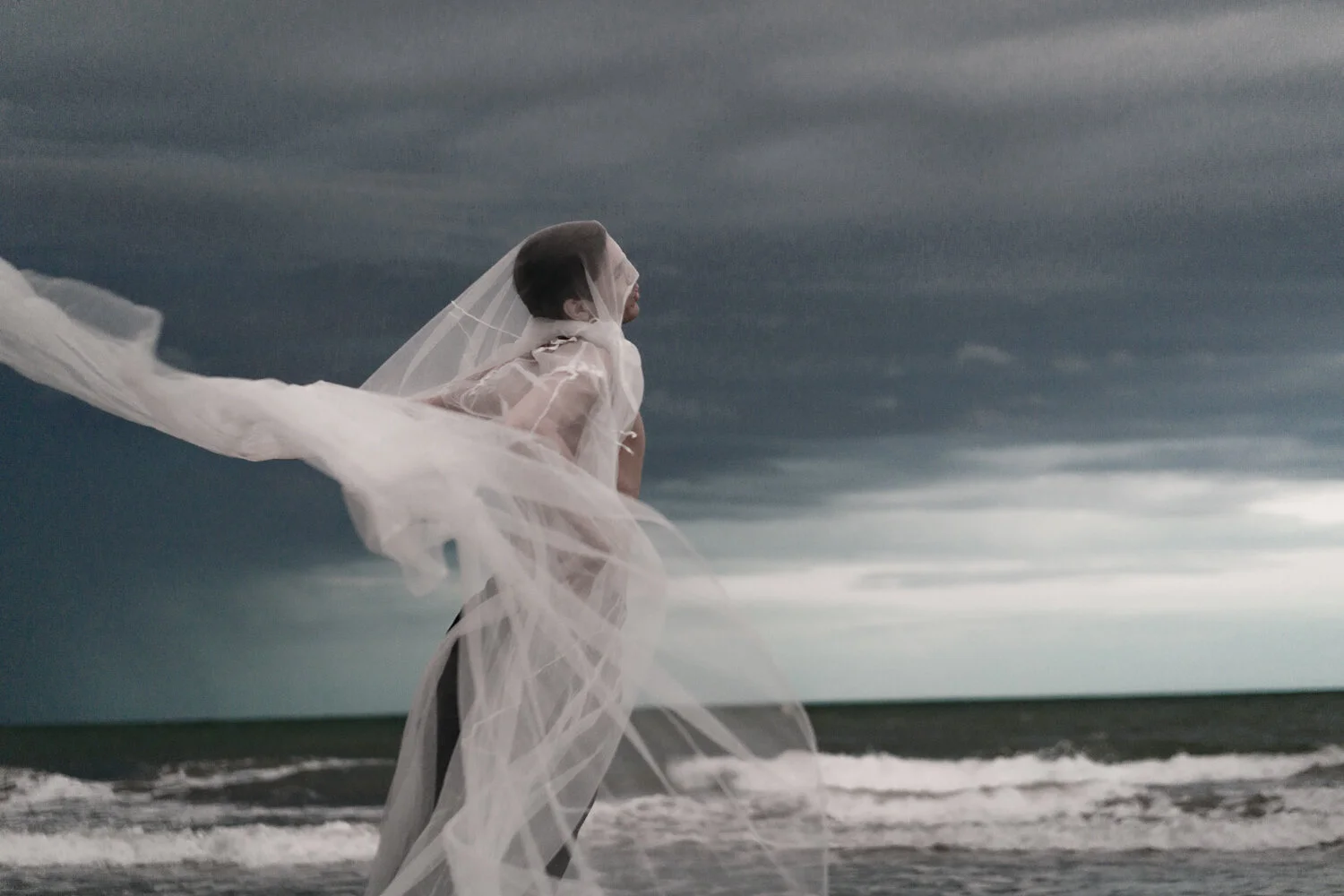
© Yuriy Ogarkov
External links are selected and reviewed when the page is published. However, Yuriy Ogarkov is not responsible for the content of external websites.
All images are protected by copyright. Reproduction of any kind without permission is prohibited.
Sharing the link to the publication is welcomed.

MOROCCO - HIGH ATLAS
PART 8 of 8
This is the final part of our journey through Morocco. Our road trip continues through the roads and off-roads of the huge Atlas Mountains. The temperature there in December varies between +15 or +20 in the noon and drops down until 0° and in some regions to the minus degree (depending on the altitude). In total we drove over 2.500km in eight days. Our whole journey lasted two weeks, eight days of which where on the road.
Tidrite
Horseshoe in Dades Gorge
Dadès Gorges
Dadès Gorges
Tizi n'Ouano pass - 2910m
Our Duster after the off road in Tizi n'Ouano pass
Azilal Province
Agoudal
Agoudal
Azilal Province
Azilal Province
The Atlas Mountains in the Azilal Province
Lake at the Bin El Ouidane
We had some action on the way to the airport that is worth to mention. Two hours before our flight we are approx. 15km away from the airport. But one of our passengers decides to play egocentric and loudly refuses to walk 800 meters through the old town of Marrakesh to her hotel. I didn't want to end up our trip in a scandal, so I had decided to take a try. After a few hundred meters I had stopped the car. It was impossible anymore to move forward in that narrow streets. People, dogs, goats, children, mopeds and bikes were all over the place. The idea of that we have to drive back somehow, drop off the car and catch our plane in less than two hours made me nervous. But still our passenger didn’t want to get out and walk the rest. It is not easy to make me mad, but that was it: “Get out of the car!”, I yelled. “Fuck you!”, were the last words of our passenger. The diva smashed the car’s doo’s door in anger and left. Now Emre and I had to get out of that anthill as fast as possible.
"Baaam!", something hit the car. "Emre, I think I hit someone", - an angry man's eyes cached mine. I though now we will be burned alive here. Suddenly an elder man appeared in front of the car and started to help up to drive away by moving people apart. I guess it took us 20 to 30 minutes just to get out of medina - the old town. The next challenge was the navigation. GPS doesn't work in Marrakesh (as well as in Fez). So, Emre navigated me. It took him a while to figure out the map but nevertheless we are on the road into the direction of the airport. Less than an hour left until the gates are closed. Of course we took the wrong turn. Getting back on the road. I am turning the orange light signaling that I am turning right. I am looking at the side mirror and see an endless line of mopeds just driving blindly without any intention to let me do the turn. I stopped. Behind me is madness and anger. The horns are buzzing. No driver's solidarity at all. I have no other choice rather than find the best moment and just turn. Just a few centimeters saved us from a crush. The moped they are like those lemmings from the computer game: blindly following the line. We are happy that they managed to brake at the last moment.
The next challenge. We are on the airport’s parking area and looking for the logo of the firm where we took the car. No luck. We call the owner. It turns out the guy who rented us the car is a shady non official car rental, so there is no logo., we have to find the right parking lot. Left the car and now we run with the heavy bags to the gates. With understanding, people in the queue let us forward. Security control, pass control - we made it! The whole stress was for nothing. Three hours delay. As we have heard later, an egoistic passenger refuses to obey the airline’s rules and he and his family had to be taken off the plane. The whole procedure took them three hours.
Still, hungry and tired we are back to Barcelona. Another unforgettable journey. We all hope that the pandemic will be over soon and we can continue to get to know other cultures of our Planet.
EPILOGUE
Morocco impressed us with its scale, nature and culture. There are many places that we could not visit that time. Probably the next time we go deeply into the desert and explore the coast from Essaouira to Dakhla.
Marrakesh at night
© Yuriy Ogarkov
External links are selected and reviewed when the page is published. However, Yuriy Ogarkov is not responsible for the content of external websites.
All images are protected by copyright. Reproduction of any kind without permission is prohibited.
Sharing the link to the publication is welcomed.

MOROCCO - ATLAS MOUNTAINS
PART 7 of 8
Our road trip through Morocco continues. After Merzouga we headed towards the serpantine roads of the Atlas Mountains.
Tinghir at the sunrise.
Tinghir
Our host Mustafa in his house

The rock walls of the Les Gorges Du Todra.
Village Tamtetoucht
Tamtetoucht
Tamtetoucht
Tamtetoucht

The Atlas Mountains
To grasp the mighty of the mountains you can find a white car and a camp at the right bottom corner of the photo for the comparison.
The Atlas Mountains
Tizi n’ Takkat n’Liloud pass. Elevation 2800 meters.
© Yuriy Ogarkov
External links are selected and reviewed when the page is published. However, Yuriy Ogarkov is not responsible for the content of external websites.
All images are protected by copyright. Reproduction of any kind without permission is prohibited.
Sharing the link to the publication is welcomed.

MOROCCO - MERZOUGA
PART 6 of 8
After Zagora we drove to Tinghir, where we stayed one night. On the Christmas day we went to see the other part of Sahara Desert that is situated near the small town Merzouga.
Driving to Merzouga’s Erg-Chebbi was like breathing in freedom. Long highways in the middle of nowhere. Free open space as far as your eye can see. Gas pedal is pushed down until the end. The velocity is 160km/h, that was the maximum that out Dacia Duster could run. The speakers grooving the car by the sounds of Meshuggah. It’s Emre’s birthday and we have the best hashish in the country with us gifted to us by one soulful host in Tinghir.
In the right down corner you can see our car. Emre has driver’s license but almost non of driving experience. Straight highways of Morocco is a perfect track and Emre has birthday. Let him drive!
Lonely camel near the highway on the way to Merzouga.
Merzouga, Morocco
We had a similar feeling to Marrakesh as we entered Merzouga. Although the town is small the streets are very busy. Once we parked our car out of nowhere a dude appeared. He was like a leech that you can not get rid off. Over and over again he followed us and tried to sell us his tours to the dunes. We had a tour reservation. Our connection was a man called Said (but not that Said from Zagora). That one should be a trusted one, because Said is the affiliate of the AirBnB hosts where we were staying in Tinghir. As we arrived, the other tourists were waiting for the caravan to take off. Those tourists with the ridiculous fashion: safari hats, ugly pink T-shirts Hollister and yellow or green clown shorts below the knees. We arrived at 15:00, so I was worried about the time because I wanted to photograph the desert at the sunset. Said calmed me down and offered mint tea and vegetables.
I didn't want to do that, but I was thinking that it can happen and yes, indeed it did have happened. We had to ride camels. Seeing those poor animals, who ride back and forth heavily weighted tourists non stop, you simply don't want to make more harm to the animal. But you have to ride it because its the part of the rules. The camp where we were going was about 5 km away from Merzouga. After an hour of ride our asses didn’t feel happy at all.
Camel ride is an enslavement for the animal and torture for the rider.
Quadracycles, 4x4 Jeeps and Road Off Motorbikes - all these reminded us of some kind of an amusement park. I knew that I could forget about the meditative silence that professor Fuder told me about back in my student years. On every dune tourists were taking photos of the setting sun. Mohamed in his red turban greeted us with his wide smile and stoned eyes. “Welcome!” - he shouted and guided us to the camp.
Erg-Chebbi is elevated 730 meter above the sea level and the dunes are around 150 meter above the surface.
In Erg-Chebbi you will not find a virgin dune, all penetrated by the human feet and car’s tires.
Sunset in Erg-Chabbi
Celebrating Christmas and birthday of one of my best friends smoking the best hash on the top of Sahara dunes, what can be better? Emre is smart, intelligent, has good sense of humor and he is a man of kind values. Sometimes in your life you can meet a person and you realize immediately that you have a very special connection. You understand that you have found a friend for life. A journey is one of the best ways to test a friendship. This is our second one and its only getting stronger. Can’t wait to go with him on our next trip.
At that night we felt in love with berber music. It has simple and groovy beats with detailed changes and slight shifts. They sing with short phrases, the melodies are simple and catchy. That was very unconventional Christmas for us.
If in Zagora in the whole camp we were the only guests, then in Merzouga we shared the place with tourists of different ages from France and Italy. It is dinner time and, of course, it is Taijin again. French guests brought some vine with them (although it is not that easy to purchase alcohol in Morocco). It was the Christmas Day, Jesus and Emre had birthday. Our hosts were lazy. Despite the cold night the hosts resisted to make the fire. Somehow we persuaded them to do the camp fire though. But once the fire almost went down they refused to tell us if they had more woods and where it was. Luckily me and a french military girl (unfortunately I can’t reveal more information, otherwise I will be wiretapped by the french DGSE) went on a mission and had found the hidden woods. I had to give a large bribe to one of the hosts in the form of the best quality hashish. The laziness of our hosts didn’t stop there. It was Christmas and Emre’s birthday. We were exited to hear berber music, because it is so groovy and hypnotic. We really felt in love with it. But our hosts refused to play (they were first class musicians). It had nothing to do with their religious concerns. Simply idleness. Our hosts - all men. Italian girls used their flirt and the berber percussion fired up the night into the rhythmical dance.
That day and night I will never forget. 300 km highway in the middle of the deserted huge area. Those huge dunes. Emre’s birthday and that nigh under the clear sky and the campfire.
On the next day I woke up early and went alone on the top of the highest dune that was available. I have never climbed huge dunes. The dunes were about 150 meter tall only, but because of the sinking feet in the sand you start to have a feeling that all of this is a mirage and you will never reach the top, simply because you stay on one place all the time.
After about 40 minutes I have finally reached the top. Desert is just unbelievable. As I have mentioned earlier, Merzouga is not that silent as Zagora. I though that I could get an hour of complete silence, but quadracycles and jeeps started to penetrate the wise silence of the desert with their churl engines.
While sitting on the dunes I was thinking about my conversations with the military woman. My brain tried to figure out how does it come together - professionally being in a military, engaging in the war zones in different continents and have such a great humor, joy of life, cuteness and very kind way of thinking. The stereotypes led me to the controversies. My brain played out different scenarios about what her character could be. Perhaps she is so nice and positivity-spreading person because she tries to compensate a part of her that knows that the military is an archetypal apparatus to protect and protect also means to kill, and maybe to kill not in the name of protection, but led by the notion of conquest? I would love to visit her one day and continue our philosophical conversations. But what a great night in the desert, beautiful morning and what a pleasure to be alive.
Another lonely camel on the way back
The night was so freezing that I got cold. We drove back to Tinghir to continue our journey back through the Atlas Mountain. But this time we will take another route through the mountains…
© Yuriy Ogarkov
External links are selected and reviewed when the page is published. However, Yuriy Ogarkov is not responsible for the content of external websites.
All images are protected by copyright. Reproduction of any kind without permission is prohibited.
Sharing the link to the publication is welcomed.

MOROCCO - DRAA-TAFILALET
From Drâa-Tafilalet starts our road trip. Finally away from the busy and chaotic cities into the vast open spaces, valleys and serpentine roads..
PART 4 of 8
Drâa-Tafilalet is one of the twelve regions of Morocco. The main economic occupations are agriculture and animal husbandry. But in the last years desertification makes these activities difficult.
From Drâa-Tafilalet starts our road trip. Finally away from the busy and chaotic cities into the vast open spaces, valleys and serpentine roads of the gigantic Atlas Mountains.
Village Telouet
Village Telouet
Kasbah Telouet.
Kasbah is a citadel, a few buildings connected together.
Kasbah Telouet was built in 18th century and was a site of pasha Thami El Glaoui 1912 - 1956.
Unfortunately the condition of Kasbah Telouet is quite poor. There are visible cracks on the carrier walls. Parts of the walls on the outside have major damages. Hopefully this historical heritage will get a proper renovation and will not fall into pieces, and no one gets hurt.
Kasbah of Tifoultoute
Sunset behind the Atlas Mountains
Our next stop is the Sahara Desert, Erg-Chigaga, situated near Mhamid and the boarder with Algeria.
© Yuriy Ogarkov
External links are selected and reviewed when the page is published. However, Yuriy Ogarkov is not responsible for the content of external websites.
All images are protected by copyright. Reproduction of any kind without permission is prohibited.
Sharing the link to the publication is welcomed.

MOROCCO - MARRAKESH
Luckily Emre took a compass with him that helped us to orientate through the city…
PART 3 of 8
From Fez to Marrakesh Emre and I traveled by train for about six hours. Marrakesh is a good city for street photography: very chaotic traffic, people running everywhere and you have a good light. The main difference between medinas in Marrakesh and Fez is that vehicles are allowed to enter the old city of Marrakersh, which is not the best regulation. Most of the vehicles are old diesel motorbikes with no or bad filters that heavily pollute air in the city. Medina's streets are narrow and sometimes covered with improvised roofs,. The streets don’t get enough ventilation and breathing becomes a tough challenge for the lungs.
Avenue Hommane Al Fatouaki
In Marrakesh we had a similar problem with navigating through the city. The same as in Chefchaouen and Fez the GPS was not working in the old city. Emre and I started to think up a conspiracy theory, that Moroccan are using powerful electronic devices to block the GPS signals of tourists so that tourist will have no other choice rather than walk the routes that Moroccan want them to walk. Luckily Emre took a compass with him that helped us to orientate through the city. Although the compass broke on the last day.
On the streets you will often hear imperative instructions from Moroccan men where to go and where not to go. They always know better than you what you want, where you have to go and what you have to do. They will tell you that the road is under construction and that there is no passing through, or that there is a mosque and you are not allowed to go to that street, even if the road is not under the construction or that there is no mosque.
Jemaa el-Fnaa is the main square in Marrakesh. Here you can buy spices, fruits, frippery and see different kind of performances. We were sadden by the cruel exploitation of the animals that were used in the shows. Monkeys in tiny cages, snakes without fangs, exhausted camels and half dead birds.
Jemaa el-Fnaa - Marrakesh main square.
After three days in Morocco each of us started to develop its own tactics when it came to bargain. "You bargain like a Berber!" - we were told by the locals. It is a compliment. Moroccans love to negotiate. Bargain is a form of small talk, a dance of communication and if you want to be polite, you have to play the game. We were using two tactics.
1) To accept the ritual and play along. It will cost you more time, but you will learn social skills and experience a set of cultural rules.
2) No big smiles with your mouth, but more compassionate expression with the eyebrows. Call your price confidently. Strongly hold your position, act as if you are an expert. If it doesn't work continue to hold your position and when the seller rejects to sell you for the price you have called, you start to walk away like you are super busy man. Usually the seller will run after you and sell it to you on your conditions. From our experience we have figured out that if you bargain well the seller can drop the price to 70%.
During our trip an unexpected change has emerged into our plan. We have decided to unite with two companions from Moscow and share a car. This experience showed us that you have to be very precise and careful by choosing people with whom you are traveling and especially when you go on a long road trip in one car...
After five days of busy, polluted and chaotic cities we were happy to get free into the direction of the Atlas Mountains and Sahara desert. Our next destination is Zagora Desert. Visiting deserts was our priority number one as we both have never been to a desert before. The journey finally starts…
© Yuriy Ogarkov
External links are selected and reviewed when the page is published. However, Yuriy Ogarkov is not responsible for the content of external websites.
All images are protected by copyright. Reproduction of any kind without permission is prohibited.
Sharing the link to the publication is welcomed.

MOROCCO - FEZ
It is a mixture of pigeon feces, cow's urine, salt and water that are used to…
PART 2 OF 8
On the next day we headed towards Fez, a city known for its old medina with more than 10,000 narrow streets without the street names and house numbers. What makes it even more difficult to navigate through medina is that the GPS doesn't work at all, which gives a perfect opportunity for many dudes to gain money by guiding the lost tourists. And again, as it was in Chefchaouen out of nowhere a dude emerged and wanted to show us the city. We have agreed. It was a 19 years old boy who knew the city very well. Besides bringing us to his commercial partners (tanners and weavers) he showed us some insider places too.
Fez is one of the most touristic towns in Morocco. Similar to Chefchaouen, everybody is trying to sell you something using aggressive sales tactics. Once we even had an argument with a seller who invited us to his shop full of decorative furniture, dishes and small knick-knacks. At the beginning he was funny, way over hospitable and polite. As he forced me to speak out my final price for a jewelry, he was not not happy with what he had heard. He threw that jewelry on the floor with anger, screamed: “Get out!” and called me “dirty”. That story became our running gag for the whole journey.
Walking through endless mazes of medina is an experience. The old city is divided by districts and each district concentrate a special handicraft. Metal workers, carpenters, tanners, weavers, ceramic etc. A special aspect of Moroccan architecture is claustrophobic narrow streets that may look dirty and shabby but once you enter a house a beautiful interior might appear to your eyes. Fountains, picturesque furniture, delicately crafted carpets, national music instruments and harmonious mosaics on the floor and the walls create a peaceful and coherent environment.
After this trip I became even more sensitive to interior design. When you browse through booking websites of Moroccan apartments, riads and houses you will notice how many accommodations you can find with beautiful interiors. I wish Spanish homeowners would have a better taste. For example, you want to rent a nice house on Costa Brava. You browse hours through ridiculously kitschy interiors until your eyes start to vomit. And all this for shamelessly high rent prices. At one point you even begin to wonder if all you see is a bad joke.
Place R’cif
Panorama of Fez medina
CHOUARA TANNERY
The most popular place in Fez is the largest leather tannery in town called Chouara Tannery. It was built in XI century and it still operates in the modern days. The whole process looks disgusting. What striked us the most is the unbearable stink that we could not get out of our noses for days after visiting the tannery. The stink comes from the mixture of pigeon feces, cow's urine, salt and water that are used to soften the animal's skin. As we were told, Chouara use natural colorants such as mint, poppy flowers and henna to color the leather. After the leather is dried, bags, babush, jackets etc. are made. We had a kind and helpful host in our riad, with whom we had a conversation about the Chouara Tannery, I was impressed that some men, with whom I have spoken, work there for more than 20 years doing that hard work. Our host told us, that working in the tannery is a prestigious and well paid job in Morocco.
Chouara Tannery
Cow skins
Drying animal’s skin
Ready products - traditional Moroccan slippers “babush”
The next stop Marrakesh…
© Yuriy Ogarkov
External links are selected and reviewed when the page is published. However, Yuriy Ogarkov is not responsible for the content of external websites.
All images are protected by copyright. Reproduction of any kind without permission is prohibited.
Sharing the link to the publication is welcomed.

MOROCCO - CHEFCHAOUEN
He took us through the mazes and circles for about 10-15 minutes so that we had a feeling that without his help we would not have found…
In December last year me and Emre, my friend with whom I went to Siberia in 2017, decided to go to Morocco. We have never been to Morocco before and as soon as we stepped out of the Tangier airport the first impression that we had was that everyone is trying to fool you just because you are a foreigner.
Chefchaouen is a touristic city with the population of over 40,000 inhabitants situated in the mountains area. All the buildings in Chefchaouen are painted blue. As we got to Chefchaouen we were met by a random dude who appeared out of nowhere offering us his help to find our riad (a traditional Moroccan house/hotel). He was not happy that we gave him only 3€. Later on we have figured out, that our riad was just 50 meters away from the spot where the sincere dude met us. He took us through the mazes and circles for about 10-15 minutes so that we had a feeling that without his help we would not have found the place. On every corner and every street Moroccans men speak to you in all the languages, trying to convince you to buy souvenirs or to see their hashish plantations.
Despite penetrative sellers Chefchaouen has its charm and cosiness. Together with cute cats on every corner, playing children, polite people and bluish colors Chefchaouen stays in our memory as an atmospheric and welcoming city.
Berber alphabet - Tifinagh
After a few hours of Moroccan nonstop mantra "Hello my friend where are you from? Do you want to see my hashish plantation?" we have decided not to see the hashish plantations, but to go up the mountains to get out of the city and to see the sunset from above.
Next stop Fez…
© Yuriy Ogarkov
External links are selected and reviewed when the page is published. However, Yuriy Ogarkov is not responsible for the content of external websites.
All images are protected by copyright. Reproduction of any kind without permission is prohibited.
Sharing the link to the publication is welcomed.

NIGHT RUNNER - BEHIND THE SCENES
In this publication I would like to tell about the process of making this image. I suppose it can be interesting for those who would like to know how modern photography is done and especially for photographers who are dealing with mixed lights scenarios…
In this nerdy publication I would like to talk about the process of making this image of the runner with the light trails. It’s a tricky photo to do, so I would like to share my experience with you. I suppose it can be interesting for those of you who would like to have a look behind the curtains on how modern photography is done and especially for photographers who are dealing with mixed lights scenarios and have ghosting effect problem.
I had an idea to create a photo of an athlete running in an urban environment at night leaving light trails behind. A few years ago I did a similar image using the 2nd curtain synchronization, but that image was done in the studio. When you are shooting outdoors it is different story. The location that I have chosen for that image was in my mind since early 2017. At that time I could not figure out what to shoot there, but I knew that the atmosphere is appealing to me and one day I will do something there.
In Barcelona there is a lot of talented athletes that are enthusiastic and ready to collaborate. On Instagram I have found Erete Udy - a Nigerian professional athlete and a fitness trainer. Great person, good humor and easy to work with.
On Sunday, a week before the shooting, me and Mark, who assisted me on this shoot, drove around the city at night to check the location that I had in my mind and also to find three more other locations for more images. Having done photos of the spots I could make bold sketches in Photoshop to see what clothes will match the environment. After Udy has confirmed that he has all the selected clothes it was time to organize the shooting.
Now it is time to speak about the technical problem that I was facing. In general working with the mixed light (strobes and continuous light) are, probably, one of the most hardest scenarios for a photographer to master. Especially when you are dealing with fast moving objects. How would you do such image? Most of photographers will say, that you make a long time exposure, illuminate your subject with continuous light for the light trails and freeze the action with the flash synchronized by the second curtain, right? That’s right, if you shoot it in a photo studio. But unfortunately there is a problem. The problem is that when you have so much ambient light around and have a long shutter speed (in my case it was 2 seconds), you will have ghosting effect. It means that your subject will appear transparent on the image. You will be able to see the background lights through the body. I have tried to find an answer on the internet, but in all the tutorials people speak about the technique but not about the problematic of the ghosting effect. There was one discussion that I have found on one forum dated 2012, but no one could find a solution how to solve the problem using only one image. Maybe you have a solution or an easier way to avoid the ghosting effect, please, share it and write your comment below.
Time to shoot! Huge gratitude to my friends Danny, Mark and Oleg who had time for me on Sunday evening and assisted me on that project. Barcelona has many great urban places that can fit a photo shooting. But the problem is that as soon as you take flashes and tripods out the security or police are usually will emerge out of nowhere and stop the fun. It is odd how security defines what is a professional shooting and what is an amateur shooting. Some consider a SLR camera as a professional tool, so it is a professional shooting in their interpretation. But what if I have a mirrorless camera or a smartphone that shoots good quality images?
So knowing how the logic of securities in Barcelona functions, after we got to the location, everything should be prepared and perfectly orchestrated. But as we all know from the experience the first image is always the hardest one to get. Instead of planned 30 minutes on the first location we have spent 60 minutes. We did three images and stitched them together in the post-production.
All the images must be done using a tripod and the remote cord to avoid camera shaking. Our main light was a flash with a CTO filter (an orange gel) to match the color temperature of the environment. The second light was a 150W LED continuous light with color gels.
1)
The first image is an HDR (High Dynamic Range) image merged from three images with the exposure value of 1 stop each (-1, 0, +1). The image is done with a small aperture to have a long depth of field (image is sharp from the closest point to the farthest point).
2)
The second image was done to record the light trails. All the camera settings stay the same. Athlete runs and an assistant follows him, and illuminates the athlete with the continuous LED lamp. Shutter speed - two seconds.
3)
The third image is done to capture the motion. In order the action to be frozen we were needed a minimum shutter speed of 1/500 of a second and the flash. We set the shutter speed even at 1/1000 of a second and used a HSS flash (High Speed Sync). The problem that we had is when we make the shutter speed so fast, we lose a lot of light, so we had to open the aperture as much as we could and we had to increase the ISO. In our situation we had to open the aperture to the maximum of f2.0 and increase the sensitivity of the camera's sensor up to ISO 3200. That changes have brought us some problems in the post-production. With the aperture f2.0 we have lost the long depth of field and with the ISO 3200 we have got a lot of grain that does not fit well into the images we have done before (the HDR image and the light trails image were shot with the ISO 100). There is also a loss of sharpness and color quality. But everything can be solved. Although I have spent two times more time in the post-production than on the location shooting.
In the post-production I have merged all the three images together (the HDR image, the light trails and the frozen action). One good advice when you are shooting a similar project and want to save time in the post-production is to have a good separation of your subject from the background. You can do it with rim light and overhead lights. We would love to have rim light and overhead, but when you are shooting in guerrilla mode you simply don't have that luxury of unpacking all your gear and flashing at night near the road with the heavy traffic and a police station nearby. It will attract too much attention, so we had to keep it as simple as possible.
The last two locations were much easier and smooth to shoot as we knew exactly how to approach the task. In total we have spent one hour on the second and the third locations and even finished the shooting 15 minutes that we have planned. Its a wrap!
BEHIND THE SCENES


Athlete: Erete Udy
Photographer: Yuriy Ogarkov
1st Assistant: Danny Fernandez
2nd Assistant: Mark Shelest
BTS & Helper: Oleg Juragin

© Yuriy Ogarkov
External links are selected and reviewed when the page is published. However, Yuriy Ogarkov is not responsible for the content of external websites.
All images are protected by copyright. Reproduction of any kind without permission is prohibited.
Sharing the link to the publication is welcomed.

RIOTS IN BARCELONA
Riots on the streets of Barcelona…
Today I went to photograph the riots on the streets of Barcelona. More text coming soon…
© Yuriy Ogarkov
All images are protected by copyright. Reproduction of any kind without permission is prohibited.

MONOVISIONS PHOTOGRAPHY AWARDS
My black & white photo series from Madagascar about Manakara's fishermen took a price in the Monovisions Photography Awards 2019
My black & white photo series from Madagascar about Manakara's fishermen took a price in the Monovisions Photography Awards 2019 honorable mention

Manakara is a city at the East Coast of Madagascar with its population of 39 540 people. The major part of Manakara's inhabitants belong to the Antaimoro ethnic group, who arrived on the island from the Arabian Peninsula in the 15th or 16th century.
Fishing is the main occupation of males, that engages around 30% of Manakara's population. Boys, who nearly reached the age of seven, are already learning to row, to catch and prepare the fish in the Manakara River before they are allowed to go out into the rough Indian Ocean.

Photographs by © Yuriy Ogarkov
All prints are for sale photo@yuriyogarkov.com
© Yuriy Ogarkov
External links are selected and reviewed when the page is published. However, Yuriy Ogarkov is not responsible for the content of external websites.
All images are protected by copyright. Reproduction of any kind without permission is prohibited.
Sharing the link to the publication is welcomed.

REDISCOVER TENERIFE
Tenerife is mostly known for its mass tourism but, unfortunately, there is yet little known about the cultural aspects of Tenerife and activities beside the commercialized amusements…
In March I did an assignment for Airbnb together with a communication/PR agency from Berlin Styleheads. Tenerife is mostly known for its mass tourism but, unfortunately, there is yet little known about the cultural aspects of Tenerife and activities beside the commercialized amusements. The idea of the Airbnb Experience project - "Rediscover Tenerife" was to introduce to a group of journalists and bloggers, that there is much more to experience on Tenerife rather than the concrete jungles of the massive hotels and shopping malls in the South. The mission of the journalists and the bloggers was to spread the word and distribute the awareness.
It was my first time on the island and the first thing that striked my eyes is the flora. It changes quickly from region to region. Its beauty is unique and enchanting. While driving from the airport to the location the island was covered in fog. From time to time the largest mountain of Spain Teide (3718m) was playfully showing its gorgeous peak, covered in snow. What a pleasure it is to breath the fresh air that goes down from the mountains with the charming flavor of the tropical vegetation.
The main host for this project was Kay Gonzalez. Born in Tenerife, studied linguistics and philosophy in the University of Cologne, cognitive scientist and associate professor of University of Illinois at Chicago. Together with his father Alberto Dorner, Kay has a few amazing apartments in the North of the island in Icod de Los Vinos. Of course, as the real Tenerife inhabitants, Alberto and Kay have their own wine bodega with the best wines from the region. Kay is a great story teller with a good sense of humor. He knows everything and everyone on the island. Thanks to Kay we could go to authentic bars, restaurants and bodegas, where you can get quality wine without worrying of getting the headache. Kay and his father Alberto Dorner are worrying about the mass tourism and what negative impact it brings to the island. The mass tourism is not only killing the nature but it also destroys the cultural uniqueness of Tenerife. Another major problem of the island are the banana plantations, that take huge amount of territory and waste a lot of the island's resources. Besides Kay and his father there are many locals who are optimistic and build communities to participate in the sustainable tourism. The biggest obstacles that those communities have is the bureaucracy and lazy contribution of the government.
It was an honor and pleasure to be part of the project. Magnificent island, delicious food, delightful people, adorable and professional team!
The view form the Alberto Dorner terrasse
Teide
The mass tourist’s hot spot Los Christianos

Los Christianos is crowded mostly by the British tourists
Macizo de Teno mountains and the most dangerous road of the island
Casa Riquelme
Casa Riquelme
Masca

Whale watching and a trip to the Los Gigantes
Los Gigantes

Permaculture farm of Pierre and Yasmin
Pierre and Yasmin bought the land three years ago and built their own paradise from scrath. The permaculture farm offers environmentally friendly agriculture experience for volunteers and tourists


San Cristobal de La Laguna
San Cristobal de La Laguna

San Cristobal de La Laguna, Casa Vidál
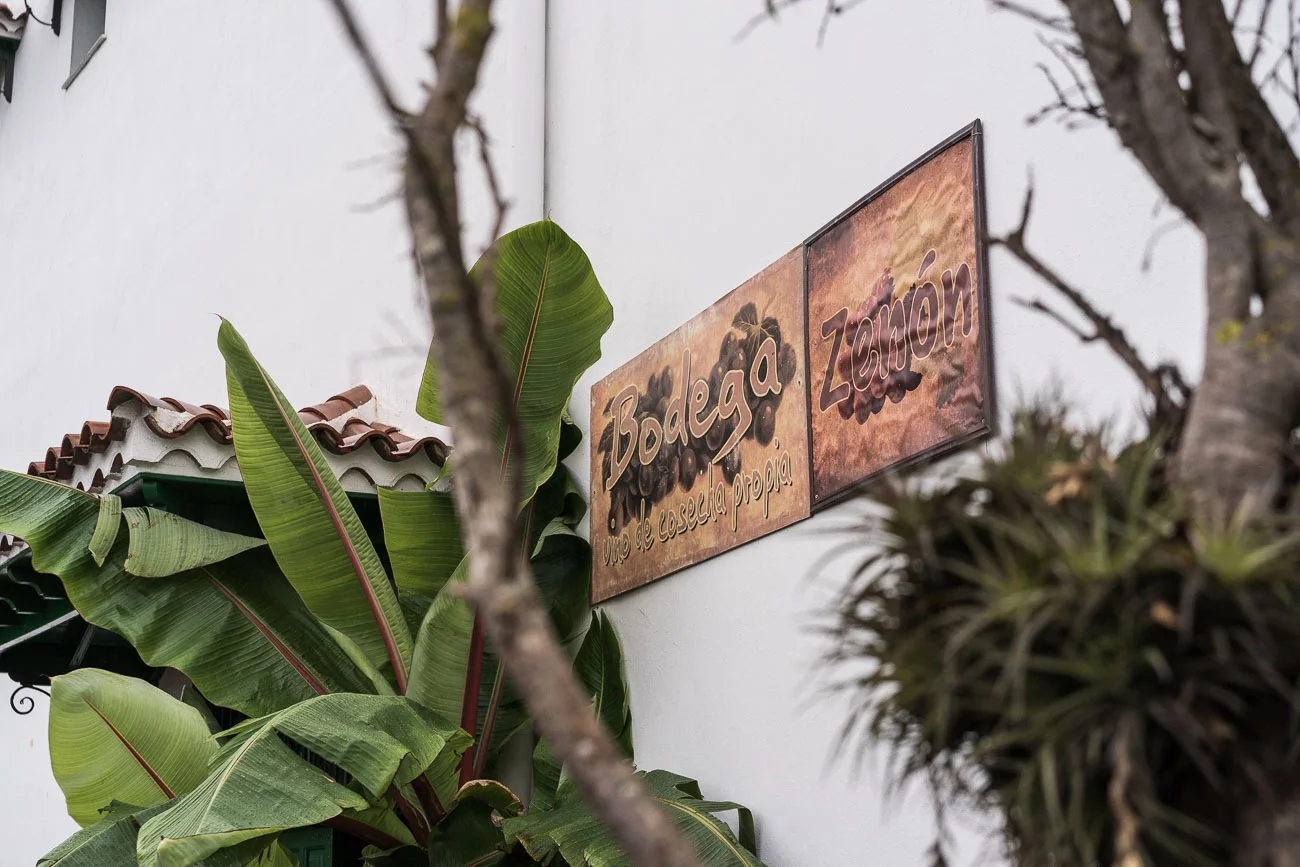

Guachinche Bodega Zenón
Guachinche Bodega Zenón
Restaurante Arístides
Back to the villa in Icod de Los Vinos

Kay Gonzalez in his bodega
Photographs: Yuriy Ogarkov
External links are selected and reviewed when the page is published. However, Yuriy Ogarkov is not responsible for the content of external websites.
All images are protected by copyright. Reproduction of any kind without permission is prohibited.
Sharing the link to the publication is welcomed.

SURFING IN SITGES
After the stormy week the weather brought the sun and the waves. I drove to Sitges and shot some images. This time I was in an impressionistic mood…
After the stormy week the weather brought the sun and the waves to Sitges…

External links are selected and reviewed when the page is published. However, Yuriy Ogarkov is not responsible for the content of external websites.
All images are protected by copyright. Reproduction of any kind without permission is prohibited.
Sharing the link to the publication is welcomed.

INTERVIEW
It is useful to understand the rules of each genre. Once you have nailed it and can perform well in a particular genre, try to break the rules. But before you break the rules you have to know the rules. When you play by the rules you are the craftsman. When you play beyond the rules, you are an artist. Don’t get me wrong. I don’t put an artist above a craftsman or vice versa. Sometimes you need to do a service for what you were hired, and sometimes you need to experiment to come up with something new...
This is my first interview as a photographer. Thanks to Hon Hoang for making it real!
If you would like to get some insides about me, philosophy and approach on photography, follow this link:
https://enflight.design/interview-hidden-world-yuriy-ogarkov/

Your subject matter ranges from sports to travel, fashion to portraits; do you approach each genre of photography differently? How do you prepare for projects with such varying subjects?
It is useful to understand the rules of each genre. Once you have nailed it and can perform well in a particular genre, try to break the rules. But before you break the rules you have to know the rules. When you play by the rules you are the craftsman. When you play beyond the rules, you are an artist. Don’t get me wrong. I don’t put an artist above a craftsman or vice versa. Sometimes you need to do a service for what you were hired, and sometimes you need to experiment to come up with something new...
External links are selected and reviewed when the page is published. However, Yuriy Ogarkov is not responsible for the content of external websites.